

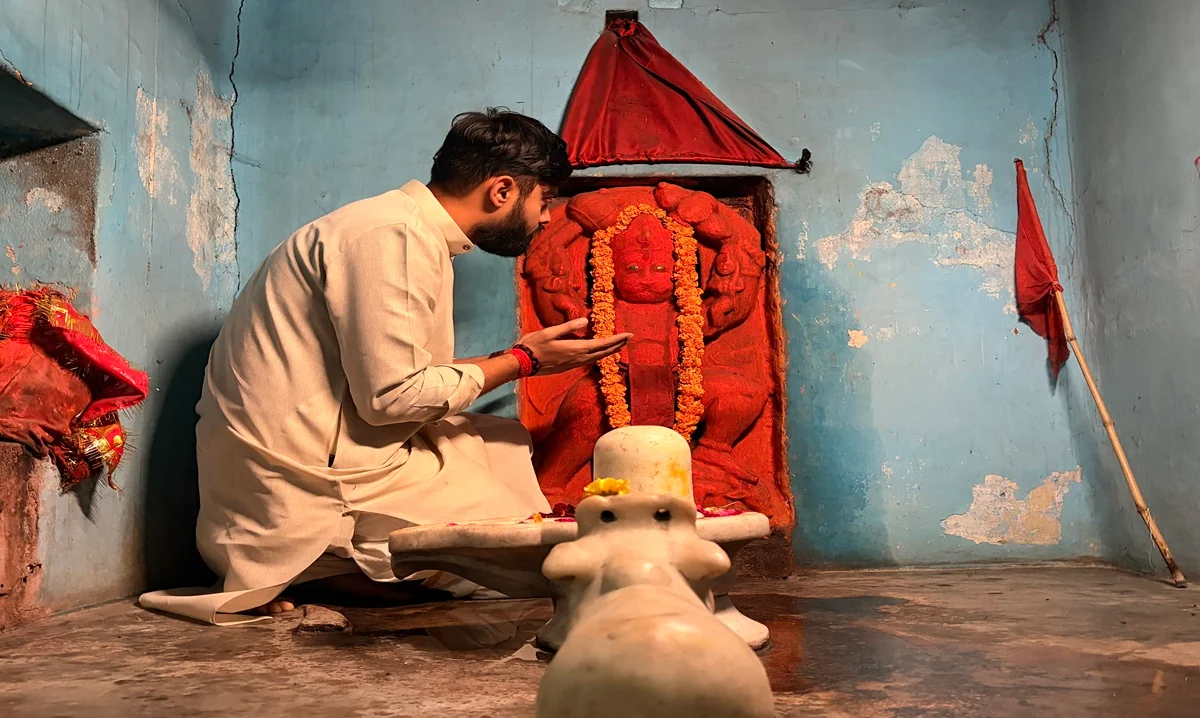
Temple Opening
5:00 AM

The Sacred Leaning Temple of Lord Shiva
ॐ रत्नेश्वराय महादेवाय नमः॥
Translation: Salutations to Lord Ratneshwar Mahadev, the sacred form of Lord Shiva, who blesses devotees with peace, spiritual strength, protection, and divine grace.
त्र्यम्बकं यजामहे सुगन्धिं पुष्टिवर्धनम्। उर्वारुकमिव बन्धनान्मृत्योर्मुक्षीय मामृतात्॥
Translation: We worship the three-eyed Lord Shiva, the source of divine nourishment and spiritual strength. May He free us from worldly bonds and guide us toward peace, spiritual liberation, and the eternal truth.
नमः शिवाय शान्ताय कारणत्रयहेतवे। निवेदयामि चात्मानं त्वं गतिर्मम शङ्कर॥
Translation: I bow to Lord Shiva, the embodiment of peace and the source behind the threefold causes of existence. O Shankara, I surrender myself to You, for You are my ultimate refuge and spiritual guide.
॥ ॐ रत्नेश्वराय नमः॥
(I bow to Lord Ratneshwar Mahadev, the sacred manifestation of Lord Shiva. May Mahadev bless devotees with peace, protection, prosperity, and spiritual strength.)
॥ ॐ नमः शिवाय॥
(I bow to Lord Shiva, the Supreme Consciousness and eternal source of divine grace. May His blessings bring purity of heart, inner peace, wisdom, and spiritual awakening.)
Worshipping Shri Ratneshwar Mahadev with sincere devotion is a sacred way to seek the blessings of Lord Shiva. Reciting His mantras and offering prayers with श्रद्धा is believed to bring inner peace, spiritual strength, protection, and freedom from obstacles. May Ratneshwar Mahadev bless every devotee with health, prosperity, wisdom, family harmony, and the divine grace to walk the path of righteousness and devotion.
Explore the history,unique architecture, and spiritual significance of Ratneshwar Mahadev Temple beside MaaGanga.
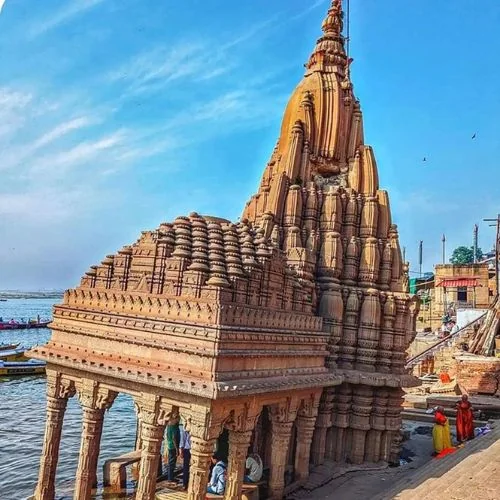
Ratneshwar Mahadev Temple is one of the most visually distinctive Shiva shrines of Varanasi, renowned for its dramatic leaning structure beside the holy River Ganga. Located near Manikarnika Ghat, the temple is popularly known as the Leaning Temple of Varanasi. Dedicated to Lord Shiva, the shrine attracts pilgrims, photographers, and spiritual seekers who admire its unusual architecture and sacred riverside setting. Its history is associated with the rich royal and devotional traditions of Kashi
Ratneshwar Mahadev is popularly recognized for its remarkable inclination toward the Ganga. Unlike conventional temple structures that rise vertically, this shrine appears dramatically tilted, creating one of the most recognizable architectural sights along the Varanasi waterfront.
The temple is dedicated to Lord Shiva, worshipped here as Ratneshwar Mahadev. Despite its unusual appearance, the shrine remains part of the sacred Shiva landscape of Kashi and reflects the deep connection between Lord Shiva, Maa Ganga, and the spiritual traditions of Varanasi.
The temple stands close to the riverfront near Manikarnika Ghat. During periods of high water, the lower portions of the structure can be affected by the rising Ganga, adding to the temple's distinctive appearance and riverside mystique.
Several local traditions and popular stories are associated with the temple's origin and its unusual inclination. Accounts regarding its builder, patronage, and date differ, so these legends should be understood as part of Varanasi's rich oral heritage rather than as uniformly established historical fact.
A distinctive Shiva shrine of Kashi, celebrated for its leaning architecture and enduring devotional heritage.
Ratneshwar Mahadev Temple holds a special place in the visual and spiritual landscape of Varanasi. Its extraordinary inclination has made it one of the city's most photographed historic temples, while its dedication to Lord Shiva gives it a deeper religious significance.
The Sacred Trikona Holy Triangle of Kashi represents a spiritually meaningful connection between three revered dimensions of divine life—Lord Shiva, Sacred Ganga, and Divine Protection. For devotees visiting Ratneshwar Mahadev Temple, this concept can be understood within the wider spiritual geography of Varanasi, where ancient Shiva temples, sacred ghats, and guardian deities form an interconnected pilgrimage tradition.
The three principal sacred centres associated with this spiritual triangle are Ratneshwar Mahadev Temple, Shri Kashi Vishwanath Temple, and Shri Kaal Bhairav Temple. Together, they represent Shiva consciousness, spiritual purification, and divine protection.
Ratneshwar Mahadev Temple, popularly known as the Leaning Temple, is situated near the sacred Manikarnika Ghat along the Ganga. Dedicated to Lord Shiva, the shrine represents the eternal presence of Mahadev within the sacred landscape of Kashi.
Its remarkable leaning structure has made it an iconic part of the Varanasi riverfront. Beyond its distinctive architecture, the temple holds spiritual importance because of its location near the Ganga and Manikarnika.
Devotees traditionally offer Ganga Jal, Bilva Patra, flowers, milk, and prayers to Lord Shiva. The shrine represents devotion, surrender, spiritual purification, and remembrance of the eternal nature of Shiva.
Shri Kashi Vishwanath, the sacred Jyotirlinga of Kashi, represents the supreme presence of Lord Shiva and divine consciousness.
Devotees seek the blessings of Mahadev for wisdom, peace, spiritual awakening, devotion, and Moksha. Vishwanath is revered as the Lord of the Universe and the spiritual heart of Kashi.
Within the Trikona, Kashi Vishwanath represents the ultimate spiritual destination—the awakening of consciousness and the realization of the eternal presence of Shiva.
Shri Kaal Bhairav is traditionally revered as the Kotwal or guardian of Kashi. He is a powerful manifestation of Lord Shiva associated with protection, courage, discipline, justice, and Kala.
Devotees seek his blessings for protection from fear, obstacles, and negative influences. Kaal Bhairav reminds pilgrims that spiritual progress requires discipline, courage, righteous conduct, and surrender to the Divine.
Sacred ShrineDivine PrincipleRatneshwar MahadevShiva, Ganga & Spiritual PurificationKashi VishwanathDivine Consciousness & MokshaKaal BhairavProtection, Dharma & Courage
Together, these sacred centres may be understood as:
Purification → Spiritual Awakening → Divine Protection → Liberation
This spiritual journey reflects the deeper purpose of pilgrimage in Sanatan Dharma. The devotee begins with purification and surrender, develops spiritual awareness through Shiva worship, follows the path of Dharma under divine protection, and ultimately seeks liberation through the grace of Mahadev.
The location of Ratneshwar Mahadev near Manikarnika Ghat gives this sacred triangle a profound spiritual dimension. The Ganga is revered as a sacred river and is deeply connected with purification and liberation. Manikarnika is traditionally regarded as one of the most sacred places in Kashi and is closely associated with Lord Shiva and the spiritual journey beyond worldly existence.
Devotees visiting Ratneshwar Mahadev may combine temple Darshan with Ganga Darshan, Deep Daan, Shiva Mantra Jaap, and prayers according to local traditions.
For pilgrims, the connection between Ratneshwar Mahadev, Kashi Vishwanath, and Kaal Bhairav can be experienced as more than a physical temple journey. Each sacred centre expresses a different aspect of the Divine—Shiva as eternal consciousness, Ganga as sacred purification, and Kaal Bhairav as divine protection.
Thus, the Sacred Trikona is not merely a geographical arrangement of temples. It can be experienced as an inner pilgrimage of the soul—purifying oneself through devotion, awakening spiritual consciousness, walking with courage and discipline, and ultimately seeking the eternal grace of Mahadev.
ॐ रत्नेश्वराय महादेवाय नमः॥
ॐ नमः शिवाय॥
ॐ कालभैरवाय नमः॥
हर हर महादेव!
Kashi has been one of India's greatest centers of Shaiva worship, Sanskrit learning, philosophy, Yoga, and spiritual practice for centuries. Ratneshwar Mahadev forms part of this vast sacred geography, where temples of different ages and architectural styles coexist along the Ganga. The shrine's enduring presence near Manikarnika reflects the remarkable continuity of Kashi's temple traditions. Its leaning structure has become an iconic symbol of the city's ancient architectural heritage.
Traditional Shiva worship, Jalabhishek, Bilva Archana, Mantra Jaap, and Aarti are performed with devotion to Mahadev.
A sacred single-recitation Rudrabhishek to invoke Lord Shiva’s blessings for peace, health, and removal of planetary doshas. Ideal for regular spiritual upliftment.
PARTICIPATE NOWOffer 1,008 sacred Bilva leaves to Lord Shiva for peace, health, and blessings. A powerful ritual to remove doshas and seek divine grace.
PARTICIPATE NOWIncludes: Elaborate multi-day Adhivasa rituals, intensive Vedic mantra chanting, grand Prana Pratistha, Nyasa ceremonies, and a celebratory 108-litres Panchamrit Abhishek.
PARTICIPATE NOWTemple Opening Hours and Aarti Schedule
5:00 AM
5:00 AM – 12:00 PM
6:00 AM onwards
12:00 PM – 4:00 PM
4:00 PM – 9:00 PM
Fill the form below to book your puja
Reach Ratneshwar Mahadev Temple near Manikarnika Ghat and experience the sacred presence of Lord Shiva beside Maa Ganga.
From Manikarnika Ghat
100–200 m
From Kashi Vishwanath Temple
1–2 km
From Dashashwamedh Ghat
1.5 km
From Maa Annapurna Temple
1.5–2 km
From Maa Vishalakshi Temple
1 km
Offer pujas, watch darshan & receive holy prasad at your home from most auspicious temples across India.
Download the app now


Need Help, Call Our HelpLine
+91-9198898999Need Help, Email to us
[email protected]